Warning: This story contains mention of suicide and may be triggering to some readers.
Posted: May 24, 2021
Lost Inside Myself
My current symptoms are a result of not just one concussion, but a cluster of three head hits sustained over a three-day period. These most recent concussions occurred in early September 2018 - the first when I was hit in the back of my head with a car door. A day later I had gotten water in my eye in the shower and whipped my head back. Then later that night I ran into a metal bedpost in our bedroom. Clearly, I’m a walking disaster so there is no telling which hit specifically caused the concussion(s).
My first diagnosed concussion happened in 2016 after a volleyball accident at work when I was an athletic trainer. After that diagnosis, I slowly returned to normal activities as my symptoms subsided. I attempted to manage this last cluster of concussions the same way. I continued to have vision and noise sensitivity issues but assumed they would improve with time if I was careful. By November 2018, I was still struggling with daily living, so I went to see my primary care physician. She diagnosed me with Post-Concussion Syndrome (PCS) and referred me to their concussion management team. I received therapy for visual processing issues, vertigo, headaches, anxiety, depression, and post-traumatic stress disorder (PTSD).
My vision issues, vertigo, and headaches were incredibly intense and forced me to isolate in our home for multiple months. My husband and I sat in almost complete darkness and silence, with only side lamps for light and speaking in hushed tones. Unable to watch television, I sat alone in the dark for most of this time, only listening to podcasts and reruns of shows I’d seen enough times to replay the images in my head.
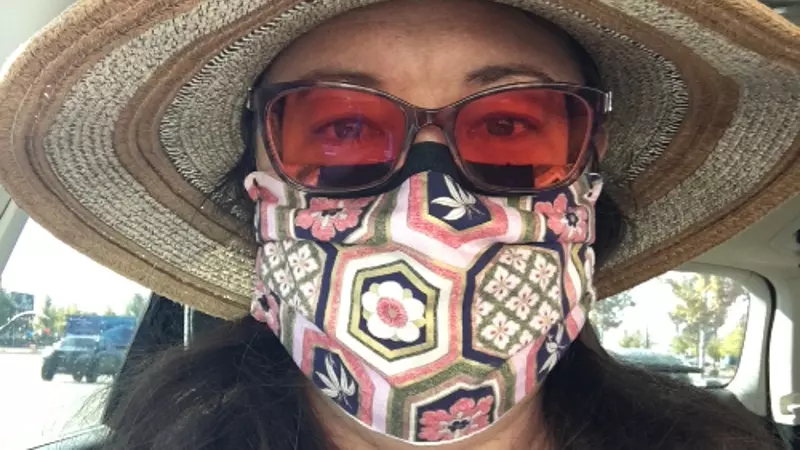
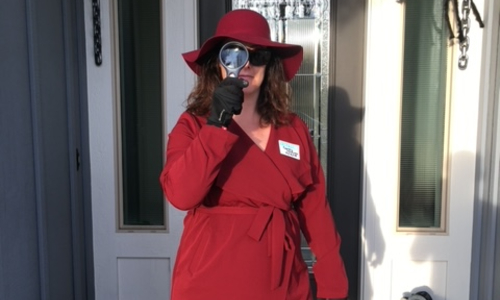
I couldn’t tolerate any part of the outside world for a very long time. I went six months without going to the grocery store. When I was forced to go out, I looked like Carmen Sandiego with a wide-brimmed hat, sunglasses, and earplugs or noise-canceling headphones. I looked like I didn’t belong. I felt like I didn’t belong. When I stepped outside of the house, my skin crawled from sensory overload.
I looked like I didn’t belong. I felt like I didn’t belong. When I stepped outside of the house, my skin crawled from sensory overload.
As time dragged on, my physical symptoms slowly improved. I was able to manage my mental health well in the beginning with the help of my neuropsychologist and counselor. I felt like I had a good-sized toolbox of resources to manage my anxiety and depression, which I had experienced and taken medication for when I was a teenager. I soon realized that the changes that were occurring in my brain were unlike anything I had experienced before and they were going to turn my life and sense of self upside down.
To me, it wasn’t a rollercoaster of highs and lows, or two steps forward one step back, until after I hit the one-year mark. Up until that point if I wasn’t battling one symptom, I was battling another, and the causes seemed unpredictable. My vision and headaches finally started to improve around February and March of 2019 after stabilizing on all the medications. As those physical symptoms got better, my mental health took a drastic turn for the worst. The mental health challenges I endured over the next few months were excruciating and the physical symptoms I still paled in comparison to the soul-torturing nightmare that was going on inside of my head.
I felt lost inside myself – like someone I didn’t know was behind the wheel. She was a person who did not feel at home in my life, who did not feel like she connected to and loved the people whom I loved, who was easily triggered, and who felt impulsive and dangerous. It felt as though she was going to hijack my life and burn everything I loved and worked so hard for to the ground. For a few weeks I talked to my therapist and neuropsychologist about whether I could be dealing with something in addition to anxiety, depression, and PTSD. I was concerned I was manic depressive or developing a personality disorder.
After my breakdown in the summer of 2017, nine months after my volleyball concussion, I stopped drinking alcohol and drastically limited my caffeine intake. Had I not quit those things that could eventually develop into an addiction or that I could self-medicate with, I think my story could have ended very differently.
I also struggle with perfectionism, so the confusion around what I was experiencing was especially brutal. I was a people-pleasing perfectionist who tried to always think of others, do nice things, be a good person, and analyze my words and actions for how they might affect others. It ate me alive to feel like I was someone who represents all the worst things I ever feared I could be. My anxiety was in overdrive and my depression about the horrible human being I was becoming was causing me to completely withdraw from every relationship in my life. I was dissociating and self-isolating in order to protect myself and the people that I loved. I believed I had to turn off my heart and my spirit to keep them from infecting this beautiful, tender, vulnerable, precious life of mine.
My anxiety was in overdrive and my depression about the horrible human being I was becoming was causing me to completely withdraw from every relationship in my life.
One day, I hit a breaking point. I had gone to an appointment with my primary care physician and I lied to her about how I was doing mentally. I had suicidal thoughts a few times in the weeks before the appointment and was starting to feel like the people in my life would be better off without me. I shared none of that information with her. I drove to work after my appointment and broke down sobbing in my car in the parking lot. I called my husband and told him I no longer trusted myself to keep myself alive any longer. It was a giant red flag to know I was dangerously close to the point of no return, yet I still felt like withholding information from my physician. I needed a safety net because I wasn’t able to keep myself afloat anymore. Despite wanting to be off medication so my husband and I could start a family, I made the difficult decision to go back on medications. That day in the car, I realized I needed to stay alive before thinking about the future.
I met with my neuropsychologist the next day and she said I had a survivor’s instinct. That was something I didn’t expect - wasn’t I thinking about suicide? She explained how even at what felt like rock bottom, there was a part of me, the fighter in me, that understood how withholding information from a medical professional was deceptive. The fighter in me overrode whatever else I was feeling. We also talked about whether I thought I needed to go inpatient for suicide watch. It was scary to have to self-assess your ability to keep yourself alive. Until now, I don’t think I really appreciated the amount of integrity and grit it takes to evaluate your own mental stability and know you are the only person who knows if you are being truthful. I decided that I did feel “stable,” for lack of a better word, enough to start meds and not go into inpatient care. I bumped up my therapy to twice a week and was barely making it from day to day. I was practicing mindfulness like it was my religion to keep me afloat until the meds kicked in. I was in a kind of vast and unending darkness that I feared would swallow me whole. But I began to see a light in the corner. I had to keep it in my vision for fear that if I blinked it would go out, like a candle in the wind. Each day, the light grew slightly bigger, stronger, and warmer. I was starting to find some space and some room to breathe.
I was in a kind of vast and unending darkness that I feared would swallow me whole. But I began to see a light in the corner.
As the meds kicked in and the depression slowly started to lift, I was now regularly filled with grief. I cried. A lot. I was so overcome with grief for the life and future I felt like I had lost. My heart was filled with such brokenness, this is not how it was meant to be. I slowly realized that this grief was my heart unfreezing and although I was still very disconnected from the people and the things in my life that I loved, my heart missed them. That was important. That was a cause for hope.
Finding My Way Home
By the end of April 2019 and after two months of medication, I decided to transition back to work full-time as a P.E. and Health teacher. I was constantly exhausted, falling asleep by 6:30 p.m. and sleeping 11-12 hours on workdays. At this time I had also finally conquered the feat of everyday necessities like going to the grocery store. I could slowly start to do small things to lift my spirits like going for a walk or seeing family, but I could only do it on days I didn’t work. I felt like I was running my life on a cost-benefit Excel sheet. Before doing any activity or leaving the house, I’d have to ask myself “what is this going to cost me?” and “what am I going to gain?” Life was not enjoyable, but I wasn’t constantly suffering anymore.
During the summer I got to really work on self-care. I walked on the greenbelt, swam in the pool 4-5 days a week, and spent time journaling. I was also able to focus on my relationships by taking love from just a feeling and making it into an action. I had come to realize I wasn’t feeling the same emotions I used to feel when I thought of someone or was with someone I cared about. I needed to work on flexing my love muscle and I diligently tried to cultivate this feeling in myself for the people in my life. This helped for a while but slowly morphed into me analyzing encounters I was having with those close to me. I started to question my decisions and picked apart my interactions with others. My dissociation only compounded as I continued to assess the damage PCS took on my life. Getting out of my head was so important and through mindfulness, I slowly got there. It took a ton of work. It still takes a ton of work. But each day, week, and month, the work slowly gets easier.
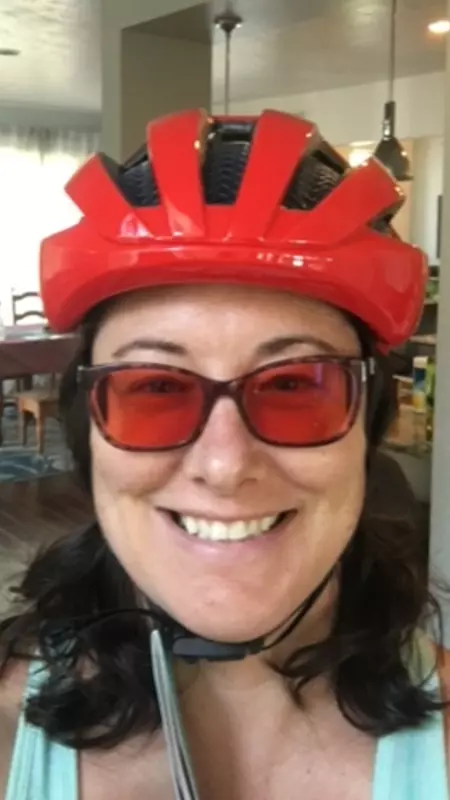
My PCS eventually crossed from the months and into the years category. The idea of having PCS for years seemed unbearable and I really started to wrestle with how long I thought I could go through life like this. Could I care for others or children? Did I think I could be a worthy wife for my partner? Was it fair to my husband to ask him to stay married to me if I am like this forever? I tried to spend some time, but not too much time, mulling over these questions and their possible answers. A wise friend of mine named Ellen, who also had PCS (if you don’t already have a friend who has it, go find one) once said, “Sometimes it's hard to know if there is an answer. You can drive yourself crazy looking for answers. Eventually, you just have to be OK with not having answers to some of your questions.” She could not have been more right. The conversations I had with her and another friend, Tessie, who serendipitously also had PCS at the same time as me, changed my perspective and my life. I don’t think I would be here today if it wasn’t for them. Find a PCS partner in crime, it will be one of the most important things you do on your journey.
Find a PCS partner in crime, it will be one of the most important things you do on your journey.
I had to come to terms with some hard truths and the quicker I did that, the quicker my heart softened, and I started to see a road home – a road back to myself. Unfortunately, or fortunately, depending on how you look at it, that road started with trust. Trust is about the hardest thing to lean into when you have PCS. For me, I didn’t feel I could trust anyone, and I didn’t feel like I or anyone could trust my brain. After suffering from PCS for so long, I felt my brain and body were always in danger. But I had to learn to trust. I had to trust that it would be OK. I had to trust this was happening for a reason. I slowly realized that home isn’t a place you find - it is a place you make. By making a home within myself, I created a place I’d always feel safe. I transitioned from feeling like a broken monster who could never belong anywhere to a healing person.